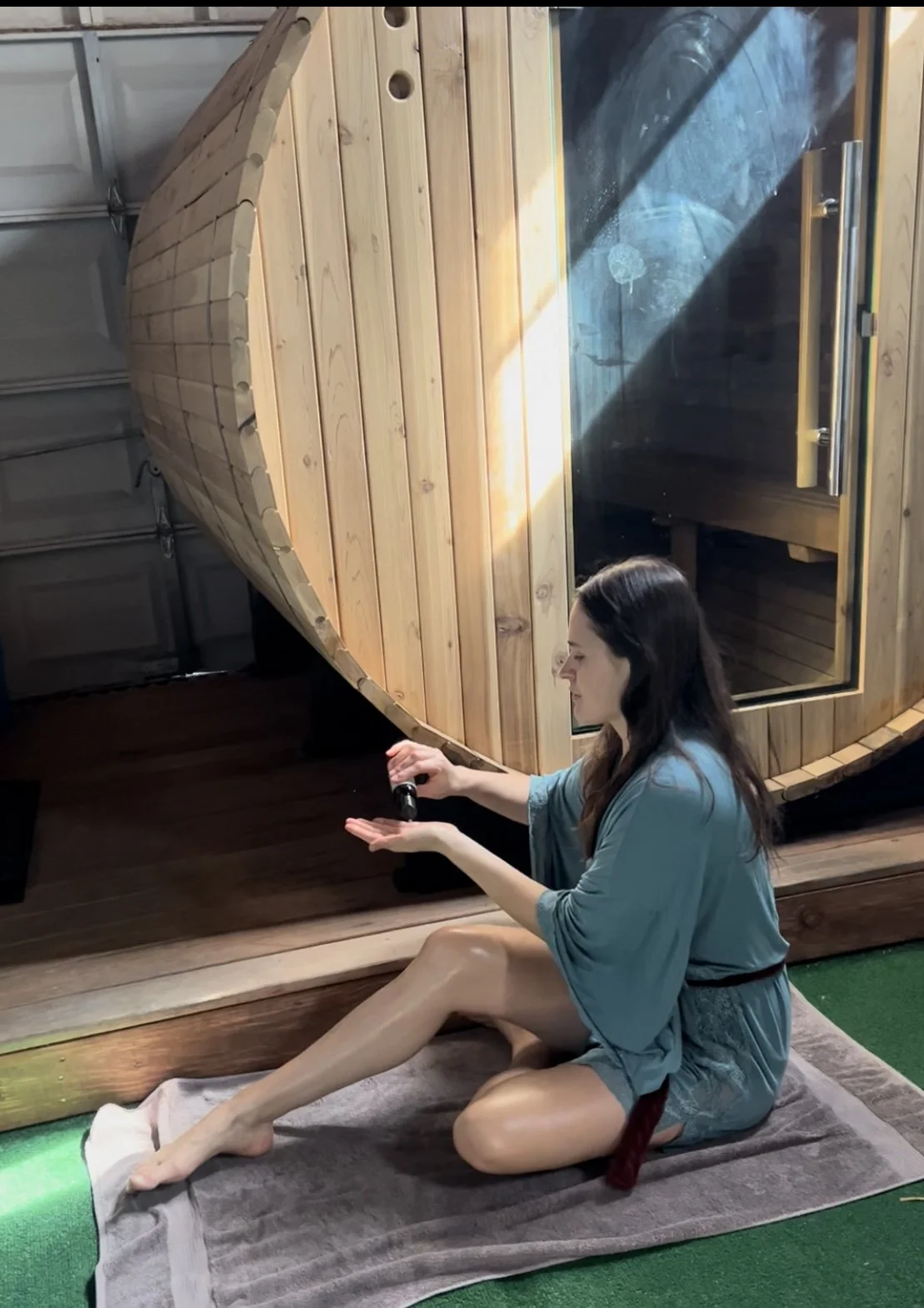
Snehana + Svedana: The Ritual of Oil & Heat

from $18.00

Pacifying Vata with Oil, Heat & the Art of Abhyanga (Oil Massage)

Ayurvedic Self-Massage Workshop | Live on Zoom | Recording available

October 19, 2026 | 6:00pm - 7:15pm (MST)

Join us for a 75-minute Living Rituals gathering devoted to Snehana and Svedana, the Ayurvedic practices of oiling and therapeutic warmth.

As we move deeper into autumn, the qualities of Vata become increasingly present in the natural world: coolness, dryness, lightness, movement, and change. Ayurveda teaches us to meet these qualities with their opposites: warmth, nourishment, unctuousness, steadiness, and rest.

Few practices embody this wisdom as beautifully as Abhyanga, the traditional Ayurvedic practice of warm oil self-massage.

In this gathering, we will explore the principles of Snehana, or oleation, and Svedana, the use of therapeutic warmth and sweating. You will learn why these practices have been used traditionally in Ayurveda to nourish the tissues, support circulation and elimination, calm Vata, and prepare the body for deeper cleansing and rejuvenation.

Together, we will explore:

  • The Ayurvedic principles of Snehana and Svedana

  • The role of oiling and warmth in balancing Vata

  • The traditional benefits and purpose of Abhyanga

  • How Abhyanga relates to circulation and the lymphatic system

  • How to choose and warm your oil

  • When and how often to practice Abhyanga

  • Proper direction, pressure, and technique for self-massage

  • How to incorporate gentle heat or sweating after oiling

  • How to turn Abhyanga into a sustainable home ritual

Most importantly, we will practice together.

You will be guided step-by-step through a traditional at-home Abhyanga practice so that you leave knowing how to confidently perform your own self-massage rather than simply hearing about its benefits.

In Sanskrit, sneha carries meanings associated with both oil and affection. This offers us a beautiful way of understanding the practice: oiling the body is not simply another wellness task to complete. It is a practice of tending, nourishing, and creating a sense of steadiness within the body.

As the season becomes colder and drier, Abhyanga gives us a tangible way to cultivate the qualities we may be needing most:

Warmth.
Nourishment.
Slowness.
Grounding.
Touch.

We will also look at the lymphatic system and the relationship between movement, massage, circulation, and the body's natural processes of fluid transport and waste removal, while distinguishing modern physiological explanations from the traditional Ayurvedic understanding of Abhyanga.

You are invited to arrive with your oil and practice alongside us. Wear something comfortable, create a warm space where you can sit or stand, and have an old towel nearby.

By the end of our gathering, you will have a practical at-home Abhyanga ritual you can return to throughout autumn and winter.

This is a practice you can carry with you for life.

Tiered options allow those with greater financial ease to support access for others:

Pacifying Vata with Oil, Heat & the Art of Abhyanga (Oil Massage)

Ayurvedic Self-Massage Workshop | Live on Zoom | Recording available

October 19, 2026 | 6:00pm - 7:15pm (MST)

Join us for a 75-minute Living Rituals gathering devoted to Snehana and Svedana, the Ayurvedic practices of oiling and therapeutic warmth.

As we move deeper into autumn, the qualities of Vata become increasingly present in the natural world: coolness, dryness, lightness, movement, and change. Ayurveda teaches us to meet these qualities with their opposites: warmth, nourishment, unctuousness, steadiness, and rest.

Few practices embody this wisdom as beautifully as Abhyanga, the traditional Ayurvedic practice of warm oil self-massage.

In this gathering, we will explore the principles of Snehana, or oleation, and Svedana, the use of therapeutic warmth and sweating. You will learn why these practices have been used traditionally in Ayurveda to nourish the tissues, support circulation and elimination, calm Vata, and prepare the body for deeper cleansing and rejuvenation.

Together, we will explore:

  • The Ayurvedic principles of Snehana and Svedana

  • The role of oiling and warmth in balancing Vata

  • The traditional benefits and purpose of Abhyanga

  • How Abhyanga relates to circulation and the lymphatic system

  • How to choose and warm your oil

  • When and how often to practice Abhyanga

  • Proper direction, pressure, and technique for self-massage

  • How to incorporate gentle heat or sweating after oiling

  • How to turn Abhyanga into a sustainable home ritual

Most importantly, we will practice together.

You will be guided step-by-step through a traditional at-home Abhyanga practice so that you leave knowing how to confidently perform your own self-massage rather than simply hearing about its benefits.

In Sanskrit, sneha carries meanings associated with both oil and affection. This offers us a beautiful way of understanding the practice: oiling the body is not simply another wellness task to complete. It is a practice of tending, nourishing, and creating a sense of steadiness within the body.

As the season becomes colder and drier, Abhyanga gives us a tangible way to cultivate the qualities we may be needing most:

Warmth.
Nourishment.
Slowness.
Grounding.
Touch.

We will also look at the lymphatic system and the relationship between movement, massage, circulation, and the body's natural processes of fluid transport and waste removal, while distinguishing modern physiological explanations from the traditional Ayurvedic understanding of Abhyanga.

You are invited to arrive with your oil and practice alongside us. Wear something comfortable, create a warm space where you can sit or stand, and have an old towel nearby.

By the end of our gathering, you will have a practical at-home Abhyanga ritual you can return to throughout autumn and winter.

This is a practice you can carry with you for life.

Tiered options allow those with greater financial ease to support access for others:

Tiered options allow those with greater financial ease to support access for others:

Program Policies

1. Program Overview

The Living Ayurveda Circle is an educational wellness program offered through multiple participation options, including drop-in sessions, a year-long committed path, and a monthly subscription. By enrolling or purchasing access, you agree to the following policies.

2. Refund Policy

Because this program includes immediate access to digital content, community spaces, and practitioner time, all sales are final.

Drop-In Sessions

Drop-in purchases are non-refundable.

3. Cancellation and Withdrawal Policy

Drop-In

Drop-in registrations cannot be canceled or transferred.

4. Missed Sessions and Recordings

Live attendance is encouraged but not required.

• Monthly classes and ritual gatherings are recorded
• Recordings are available to active members for the duration of their access
• Drop-in recordings are available for one week

We do not offer make-up sessions, partial refunds, or extended access due to missed sessions.

5. Drop-In Session Policy

Drop-in sessions provide access to one live class or ritual gathering.

• Drop-in purchases are final
• Recording access is available for one week
• Drop-in access does not include WhatsApp support or practitioner access

6. Community Conduct Policy

The Living Ayurveda Circle is a shared learning and ritual space.

By participating, you agree to:
• Engage respectfully and compassionately
• Maintain confidentiality within the community
• Refrain from unsolicited advice, medical claims, or self-promotion
• Honor the facilitation and container

We reserve the right to remove any participant whose behavior disrupts the safety or integrity of the community. Removal does not qualify for a refund.

7. Scope of Practice and Disclaimer

The Living Ayurveda Circle is an educational wellness program.

Content shared is not intended to diagnose, treat, cure, or prevent disease and does not replace medical care.

Participants are responsible for their own health decisions and should consult qualified healthcare providers when appropriate.

8. Program Changes

We reserve the right to make reasonable adjustments to scheduling, content, facilitators, or delivery methods while maintaining the integrity of the program.